


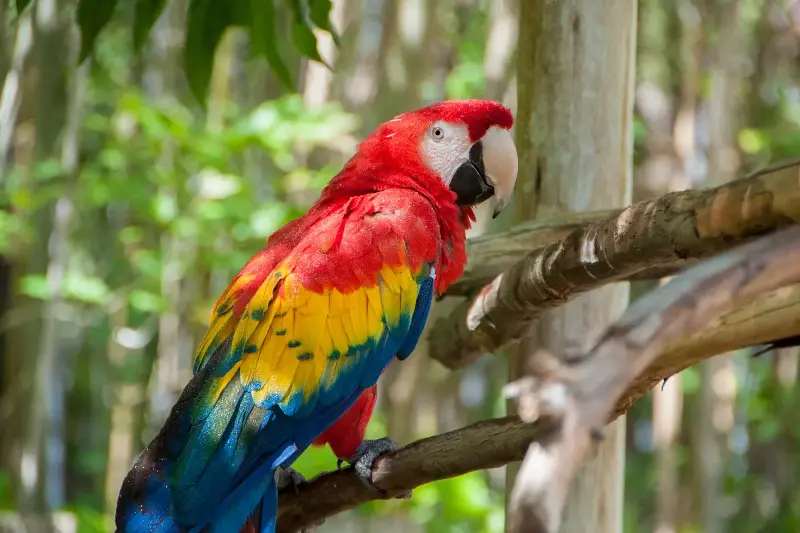
If you have ever wandered through a tropical rainforest, it is likely you heard an explosion of color long before you saw it. Among the emerald leaves and dappled sunlight, flocks of long-tailed parrots dart and dance, drawing the gaze of all who are lucky enough to spot them. These vibrant birds are true performers, with feathers as vivid as brilliant brushstrokes and personalities to match. Journey with us into the fascinating world of these avian wonders and discover why they are affectionately called the dancers of the rainforest.
A RAINBOW AMONG THE GREEN
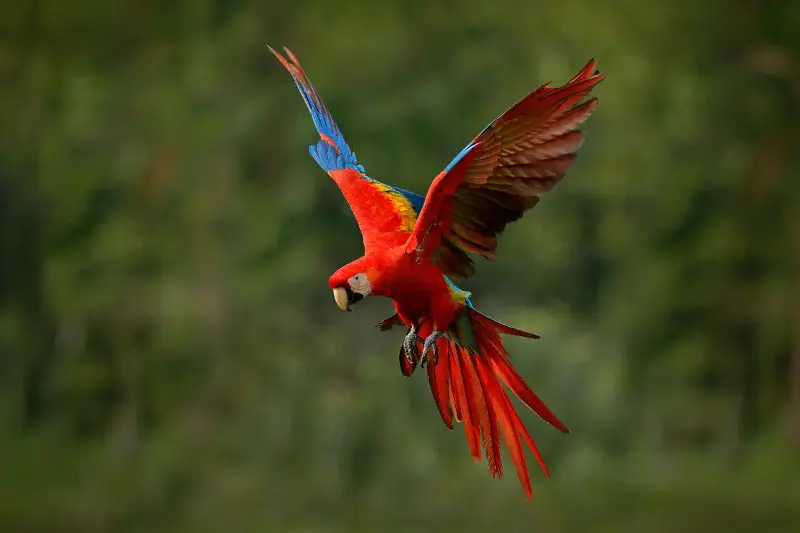
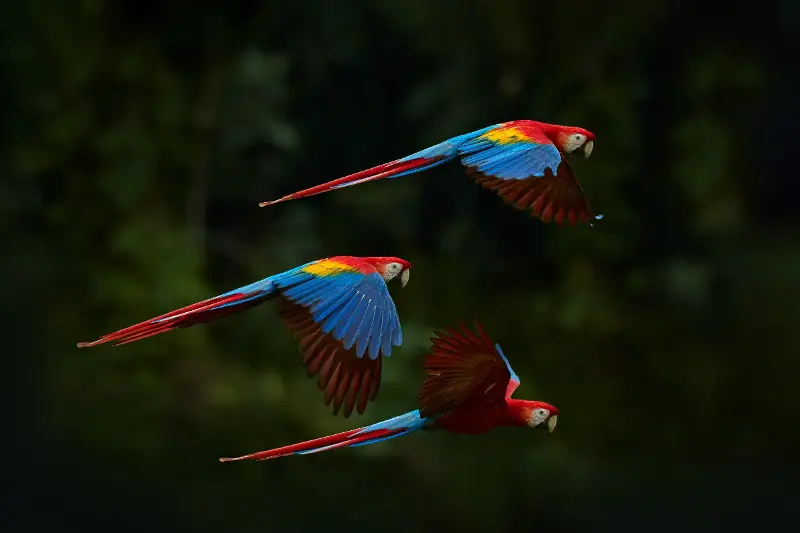
Rainforests across South America, Southeast Asia, and Africa serve as home to a dazzling array of parrot species. Whether macaws, lorikeets, or parakeets, their most striking feature remains the same: elongated, graceful tail feathers that wave like banners during flight.
- Proportional marvels: In some species, such as the blue-and-yellow macaw, the tail can account for more than half of their total body length.
- Vivid plumage: Their colors—ranging from scarlet and turquoise to deep indigo—are nature’s way of reflecting even the smallest amount of available light, creating a visual feast in the dense jungle canopy.
MASTERS OF MOVEMENT
It is not just their color that makes these birds so enchanting; their aerial acrobatics are a true marvel. Using their strong chests, flexible wings, and long tails as rudders, they loop and twist through the trees with jaw-dropping precision.
- Essential agility: Their flight is a vital adaptation, allowing them to navigate their complex environment with ease.
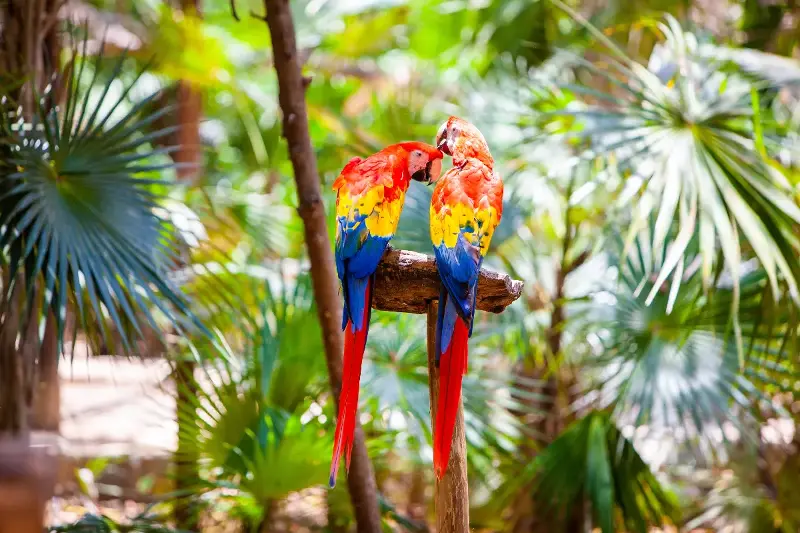
- Social choreography: Courtship often involves a "dance"—synchronized head swaying, tail flaring, and melodic whistles. Pairs frequently mirror each other’s movements, weaving perfect lines through the air to strengthen their lifelong bonds.
SOCIAL BUTTERFLIES OF THE AVIAN WORLD
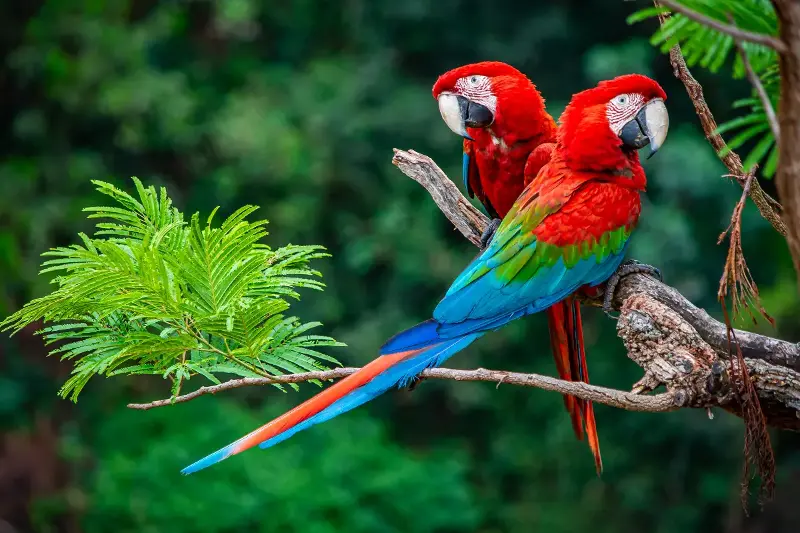
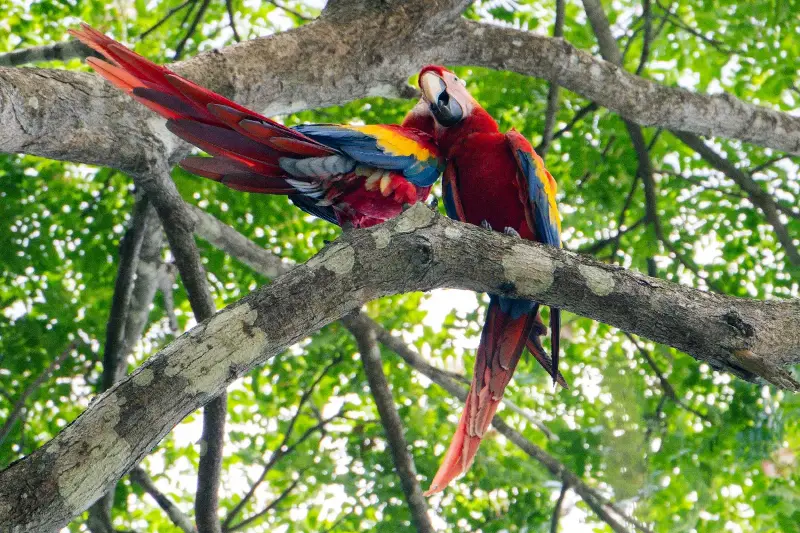
Long-tailed parrots are rarely solitary. They prefer the company of their own kind, roosting in noisy, vibrant flocks that can number in the hundreds. Within these gatherings, parrots display remarkable intelligence. They form complex social hierarchies and maintain close friendships, settling differences through vocalizations rather than conflict. Furthermore, their ability to recognize individual voices and mimic various sounds—including human speech—highlights their status as some of the most cognitively advanced birds on the planet.
NATURE’S GOURMETS AND BRIGHT FEATHERS
Feeding is a favorite pastime for these colorful inhabitants. Using strong, hooked beaks, they feast on a wide range of rainforest delicacies, including:
- Nutritious seeds and fruits
- Sweet nectar from tropical blossoms
- Flowering plants
Interestingly, the brilliance of their plumage is directly linked to their diet. The pigments in their feathers are derived from the nutrients in the foods they consume. Their vivid colors serve as a natural health report, signaling to potential mates that they are well-fed, healthy, and genetically fit.
CHAMPIONS OF THE ECOSYSTEM
Beyond their charm, these parrots are crucial to the health of the rainforest. They act as vital seed dispersers. By traveling long distances after feeding and excreting seeds far from parent trees, they provide plant life with the opportunity to thrive in new territories. This "silent gardening" ensures the future diversity and resilience of the jungle, proving that every inhabitant plays an essential role in nature’s delicate web.
A FRAGILE FUTURE
Despite their spectacular adaptations, many parrot species face significant challenges due to habitat loss and environmental change. Fortunately, global conservation efforts—including habitat protection and responsible ecotourism—are making a positive difference. By supporting these programs, we can ensure that the rainforests continue to echo with color and song. As you admire these birds, remember that their survival is a testament to the resilience of our natural world. Keep looking upward; with luck, you may witness a rainbow unfurling among the leaves.