



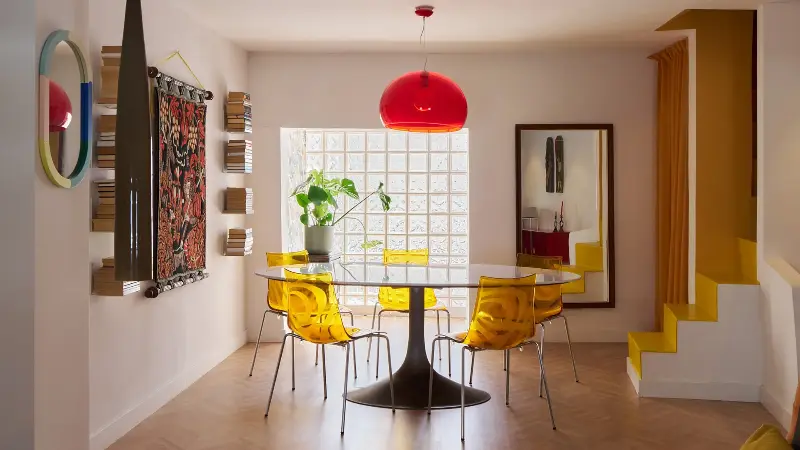
After moving from Russia, designer Victoria Irbaieva bought and began renovating a quaint 1920s Culleran home when she discovered just how much original 20th-century furniture and lighting has survived in Spain. That moment shaped the vision for the home: a space where discrimination by decade doesn't exist and 'collected' vignettes take control.
As seen in many modern homes fighting to feel uniquely cozy, this abode was designed to feel less brand-new and more lived-in by styling pre-loved and flea market finds alongside a smattering of new pieces under one roof.
And it's a lesson in how not to be fooled by square footage, as, for a small apartment, it makes a definite impact. Now, let's venture deeper into this Valencian home and unveil the other design lessons hiding in plain sight.
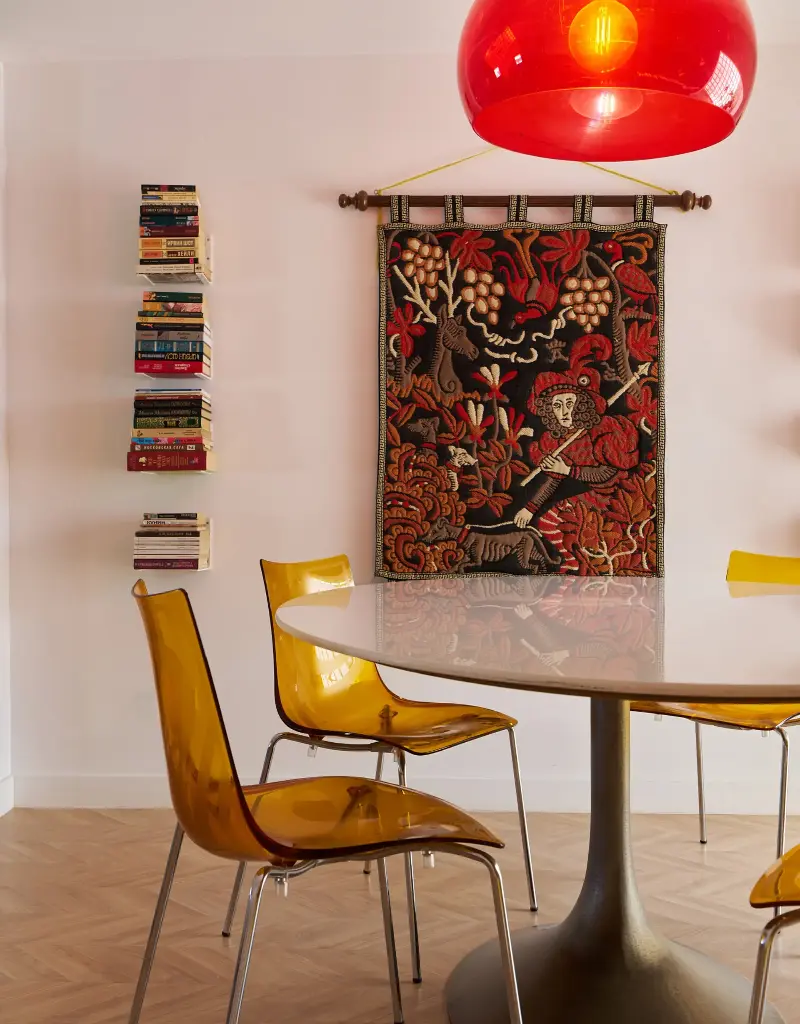
Although her love of mid-century design became the starting point for the home, designer Victoria Irbaieva tells me her aim was to strictly avoid recreating a textbook 1960s interior.
"Different periods, countries and design movements coexist here — after all, a family does not stop buying furniture when its favorite decade comes to an end. I chose things because I wanted to see them at home, use them and live with them," she notes.
"Around 80% of the pieces in the house were bought at flea markets and through second-hand platforms — not as budget substitutes for designer furniture, but as a way of gaining access to authentic 20th-century design."
As you step through the home, you might spot an original 1960s Alessandro Pianon for Vistosi lamp, bought at a flea market for €20 (of which a similar design is selling on Vinterior for more than 70 times this price) and a pair of vintage Murano wall lights found online for €200 (found on 1stDibs for another pretty penny). And it just goes to show that learning how to thrift is a rewarding skill to hone.
Antique collecting aside, Victoria tells me that an inclusion of utmost importance from start to finish was light. "It became one of the central themes of the project. For us, coming from the north, sunshine is something rare and joyful — something you want to catch whenever you can," she explains.
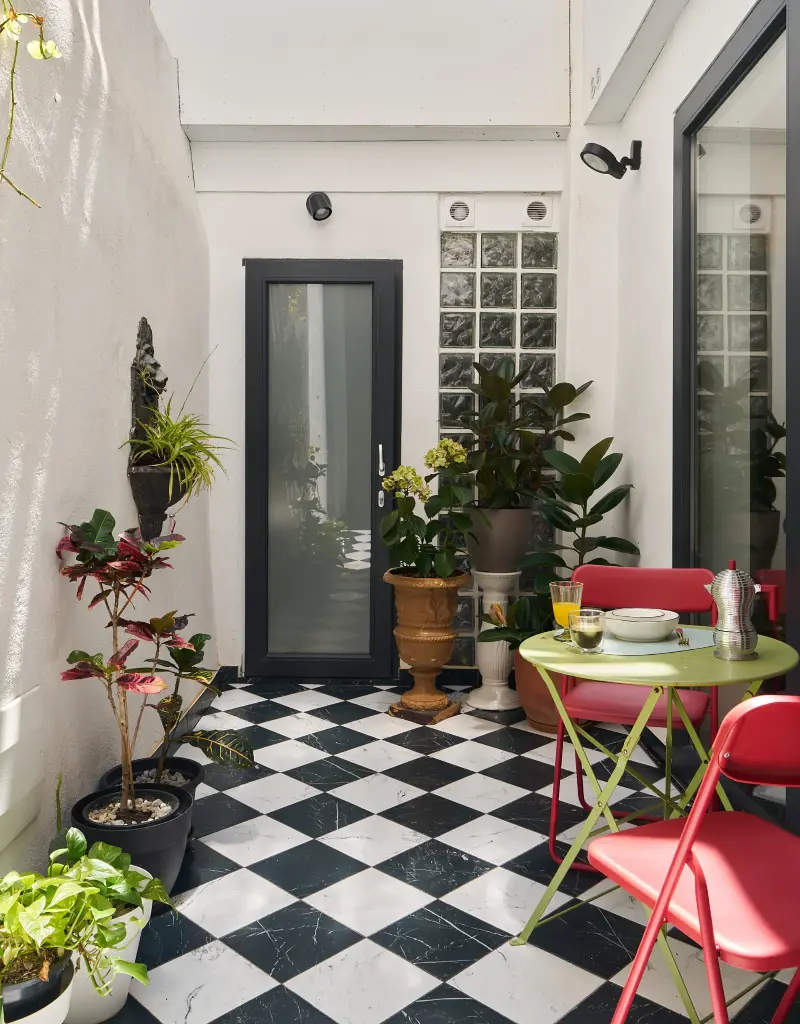
"That is why we created an outdoor dining area on the roof terrace and turned it into a garden filled with flowers and fruit trees. We also tried to bring natural light as deep into the house as possible, using glass blocks in the bathrooms and upper living room and replacing some of the solid interior doors with glass ones."
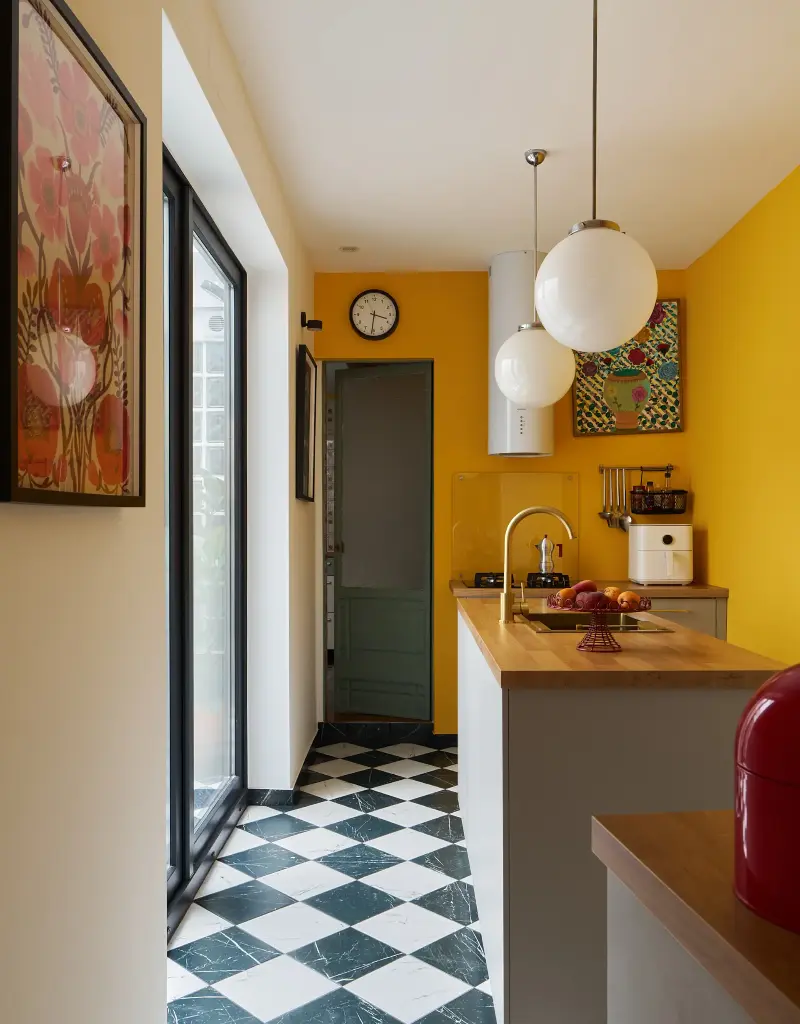
Since color is the key to a charismatic small apartment, Victoria points out that the first bold swatch she chose for the house was a rich, saturated yellow. "In many ways, this yellow set the direction for everything else I subsequently sought out and discovered for the home," she says.
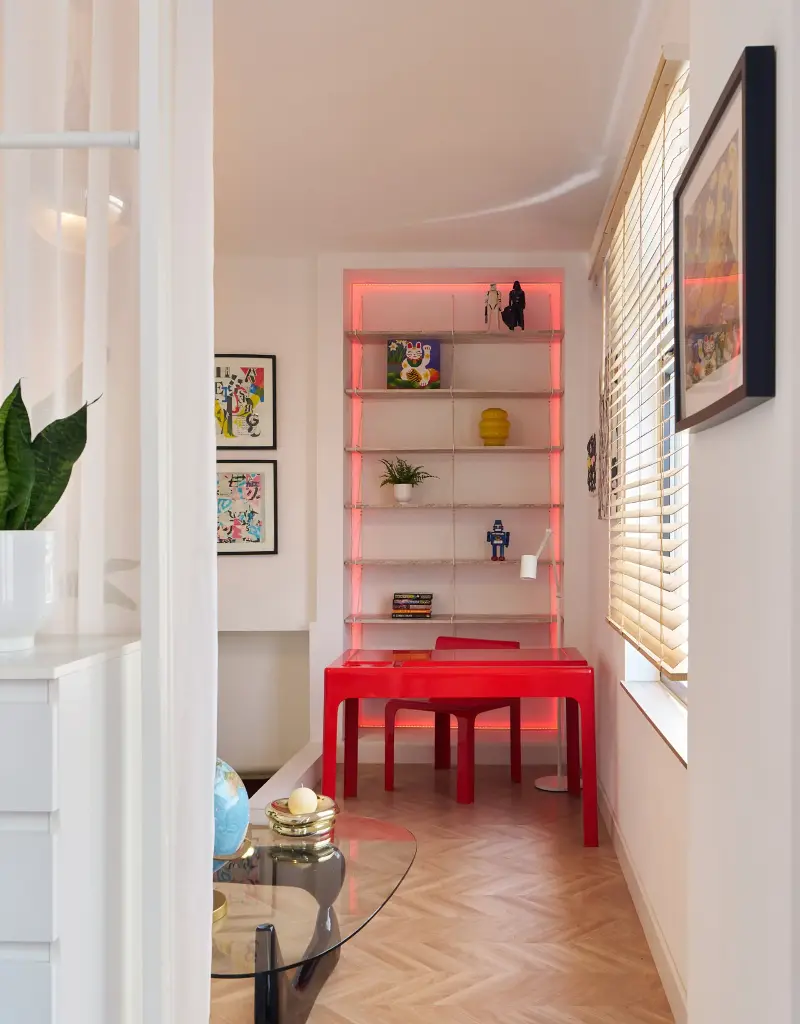
"The second major color accent came in the form of a bright red table and chair by Marc Berthier for Roche Bobois, which I selected for the study on the third floor. This created a kind of tension between the lower and upper levels — a transition from a dense, saturated yellow to a brilliant, glowing red. Later, an armchair of the same color with a chrome base appeared in the study for a pop of unexpected red. Its rhythmic silhouette unexpectedly provided the inspiration for the staircase leading from the second to the third floor.
"One day, while pondering what to do with that staircase, I glanced through the ajar door of the study, caught sight of the red armchair, and suddenly realized how its lines and color could be extended into the staircase itself. And so, the staircase became red. Now, I love how easy it is to give directions to guests: 'Head up to the second floor, then take the red staircase to the living room. Let’s watch a movie!'"
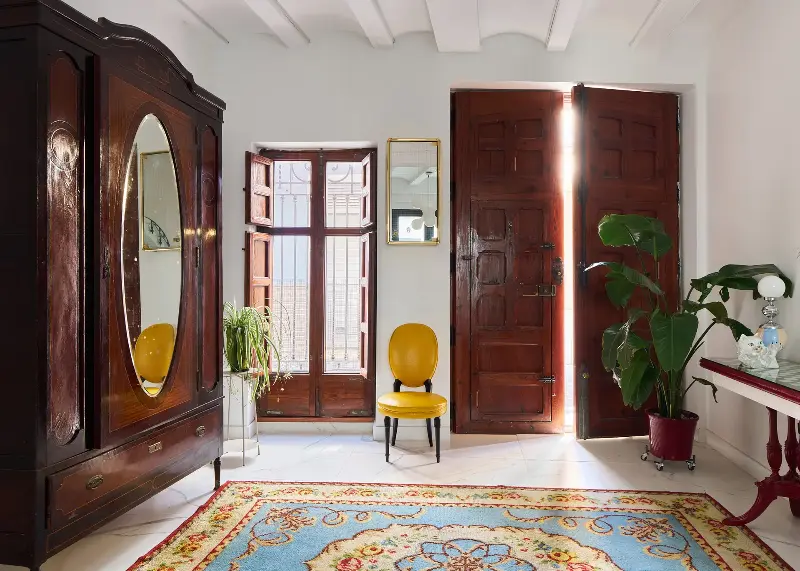
"Amidst all of our ideas, we held onto our promise to retain its Spanish history. We preserved the façade, the century-old wooden doors, windows and balcony doors, the staircase with its wrought-iron balustrade, and the original floor tiles. Some of the old window fastenings may even be around two hundred years old — before living here, we had only seen mechanisms like these in a museum, at the Borgia Palace," she shares.
"To me, these details are not decorative 'old-world charm'. They are what make this an unmistakably Spanish house. People lived this way here a hundred years ago, and they continue to live in these houses today.
"They give us a tangible sense of belonging to the life of our town and to the community around us. So the principle behind the renovation became very simple: the new was introduced where it made our lives better, while the old remained wherever it could continue to live with the house."
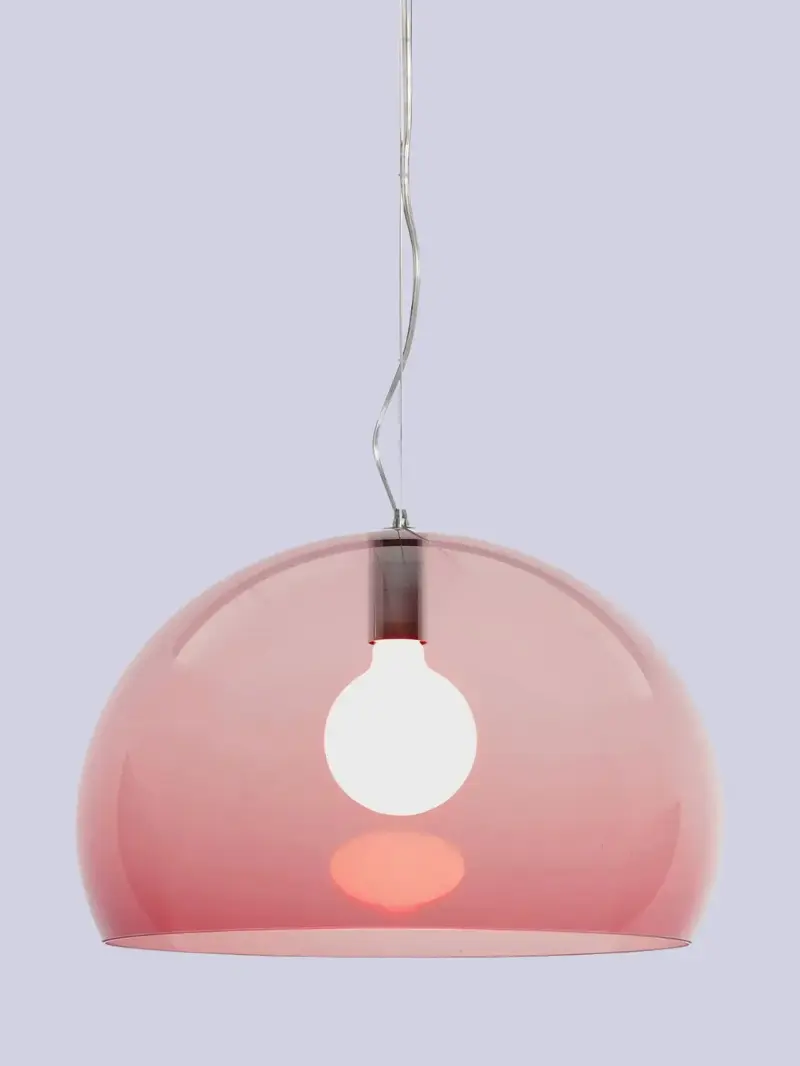
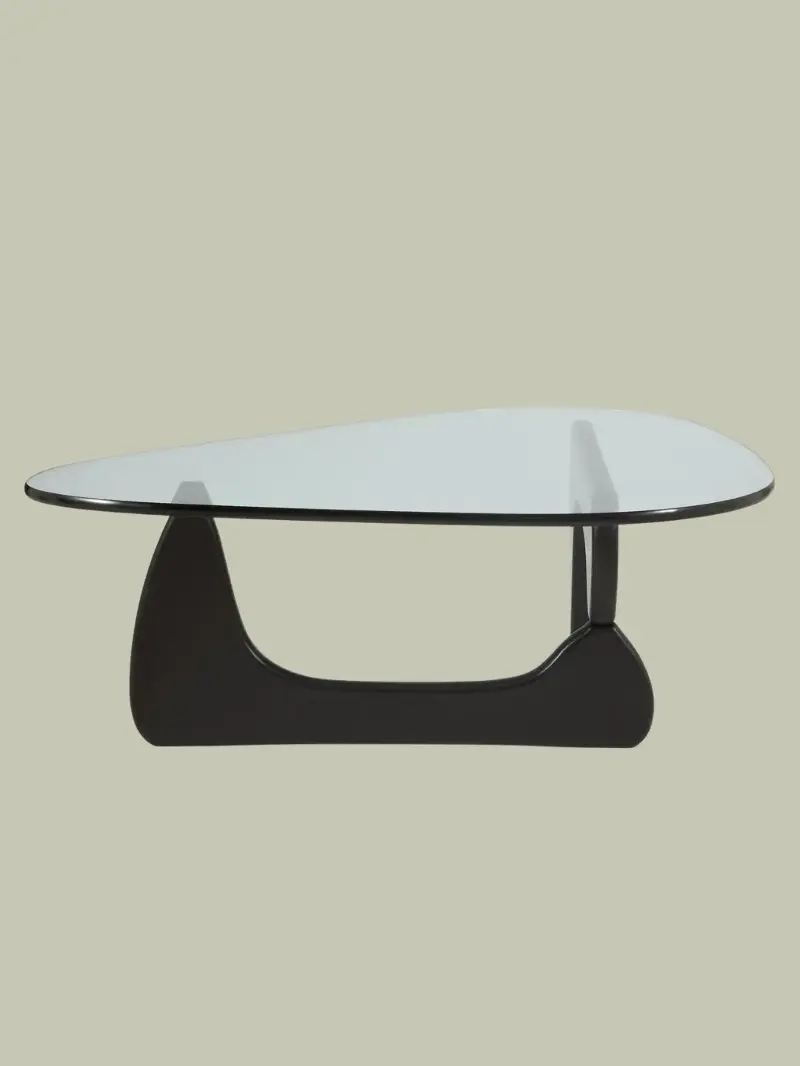
Get the Look

Looking for more small home inspiration? Tour this colorful St. Petersburg apartment by OM Studio and sign up for the Livingetc newsletter to virtually snoop through the coolest homes of the moment.