



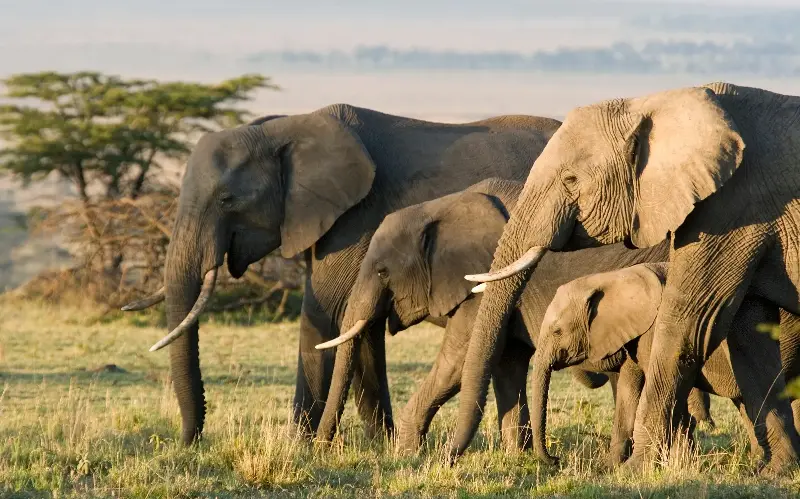
A new study has established for the first time that elephants prepare precisely measured concoctions of medicinal plants to administer to their young.
The finding is based on observations of Mount Elgon’s cave elephants in western Kenya and represents a level of sophisticated self-medication among animals that has not previously been documented.
Researchers from the Bernard Nocht Institute for Tropical Medicine (BNITM) in Hamburg believe the elephant herds clustered around Elgon use at least 35 different plant species as medicine.
In some cases, mother elephants were seen to create a medicine by munching up specific roots and leaves which were then mixed together with breast milk.
Although evidence of self-medication among other animals such as great apes is well-known, there have been no previous examples of creatures other than human beings creating and administering medicine to other members of their species.
The scientific paper, published this week in the academic journal Nature, is the first to acknowledge such behaviour from an animal caring for its young.
Mount Elgon elephants are already renowned throughout the world for mining the region’s deep caves with their tusks for essential minerals to supplement their diet.
The new breakthrough suggests an even more advanced ability to take advantage of naturally occurring medicinal plants on the slopes of Elgon, Africa’s oldest extinct volcano, which straddles the Kenya-Uganda border.
Local scouts, National Park rangers and community elders working alongside British charity the Mount Elgon Foundation were the first to witness the behaviour by the elephants.
They reported this back to UK-based charity the Mount Elgon Foundation, which supported the work of the German team.
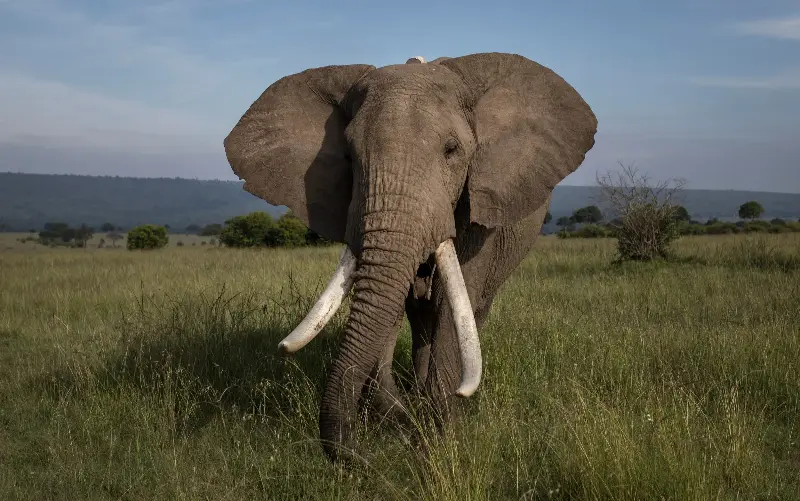
The paper, led by Dr. Fabien Schultz, identified some of the plant species as being sought out by visibly sick elephants for specific therapeutic purposes, as well as being administered to offspring.
Many of these plants also play a role in Indigenous traditional medicine and have been scientifically shown to possess antibacterial, anti-inflammatory, or antiparasitic properties.
As well as the plants, four types of soils, minerals or clays were picked out as being part of the elephants’ health regime.
“These first-hand reports from local experts suggest that elephants may intentionally seek out medicinal plants, indicating a targeted rather than random foraging behaviour,” the paper notes.
“Taken together, our findings suggest that African elephants may have more diverse and complex medicinal repertoires than previously recognised, and can selectively target these resources when their health is compromised.”
Reports from Kenya have previously observed that pregnant elephants eat leaves from trees in the Boraginaceae family to induce delivery and help with postpartum symptoms. Kenyan women brew tea from these plants for that same purpose.
A 2025 study of African forest elephants in Gabon found that individuals with higher parasite loads were more likely to consume banana stems and papaya plants than more nutritious food because both of these contain compounds that affect intestinal parasites.
The BNITM report goes on: “Better understanding elephant medication behaviours, therefore, may not only shed light on their cognitive abilities and ecological intelligence but also reinforces the urgency of conserving their habitats.
“As habitat destruction may limit their access to critical medicinal resources, protecting these ecosystems is essential for both elephant welfare and broader biodiversity conservation.”
The researchers are now undertaking laboratory testing of the plants to determine their exact pharmacological properties.
Christopher Powles, Chair of the Mount Elgon Foundation, who first identified the traditional knowledge set out in the study, said: “The findings provide further evidence for the exceptional cultural behaviour of Mount Elgon’s elephants, already well known for their cave-mining activities, and suggest that their medicinal knowledge may be socially transmitted across generations.”
Protect yourself and your family by learning more about Global Health Security