


Who truly shapes your notion of luxury? The emblem on your purse, the bubbly on your table, the fragrance on your skin—odds are, Bernard Arnault stands behind it all.
Born in 1949 in Roubaix, an industrial city in northern France, Arnault did not grow up surrounded by silk and crystal. Yet today, as the Chairman and CEO of LVMH, he commands the world’s largest luxury conglomerate and oversees one of the planet’s most staggering personal fortunes.
FROM CONCRETE TO COUTURE
Arnault’s journey did not begin in an opulent fashion salon, but in construction and public works. His family firm built infrastructure, not high-end accessories. After completing his engineering studies, he entered the family business and quickly demonstrated a keener skill for strategic figures than for concrete and steel.
The definitive turning point arrived in the 1980s. Arnault spotted an improbable opportunity: a struggling textile firm that held a slumbering gem—Christian Dior. Arnault acted with ruthless precision, reorganizing the company and divesting non-core assets to safeguard the Dior name. He recognized it as pure brand treasure, and that single transaction launched an empire.

BUILDING A LUXURY EMPIRE ONE ICON AT A TIME
Following the success with Dior, Arnault began assembling the mosaic that would become LVMH (Moët Hennessy Louis Vuitton). This powerhouse now spans fashion, jewelry, watches, wines, spirits, and beauty.
Under his leadership, the portfolio has expanded to include names that define global aspiration:
- Louis Vuitton: The crown jewel of travel and leather goods.
- Tiffany & Co.: A recent multi-billion dollar acquisition to dominate the jewelry sector.
- Dom Pérignon & Moët & Chandon: Leaders in the world of prestige spirits.
- Bulgari & TAG Heuer: Dominating the high-end watch and jewelry markets.
Arnault’s acquisition strategy follows a consistent, disciplined pattern: spot the heritage, fund the artistry, and boost the brand through measured growth and pricing power. This methodology has occasionally vaulted him to the pinnacle of the world’s wealthiest rankings.

THE PSYCHOLOGY OF DESIRE
Arnault’s true brilliance resides less in his financial spreadsheets and more in his grasp of human desire. To him, luxury is never a necessity; it is a narrative. He has perfected a recipe for global influence based on three pillars:
- Scarcity: Utilizing exclusive editions and waiting lists to maintain an aura of "not for everyone."
- Storytelling: Emphasizing French workshops, hand-stitched hides, and vineyards bathed in dawn mist to create an emotional bond.
- Consistency: Maintaining ironclad oversight of distribution channels and brand identity to ensure a Louis Vuitton bag feels the same in Paris as it does in Tokyo.
In a modern era fixated on pace and volume, Arnault markets leisure and endurance. He sells the idea of a monogrammed trunk that fits as perfectly in a 1920s rail car as it does in the back of a modern electric SUV.
POWER, SUCCESSION, AND THE NEXT CHAPTER
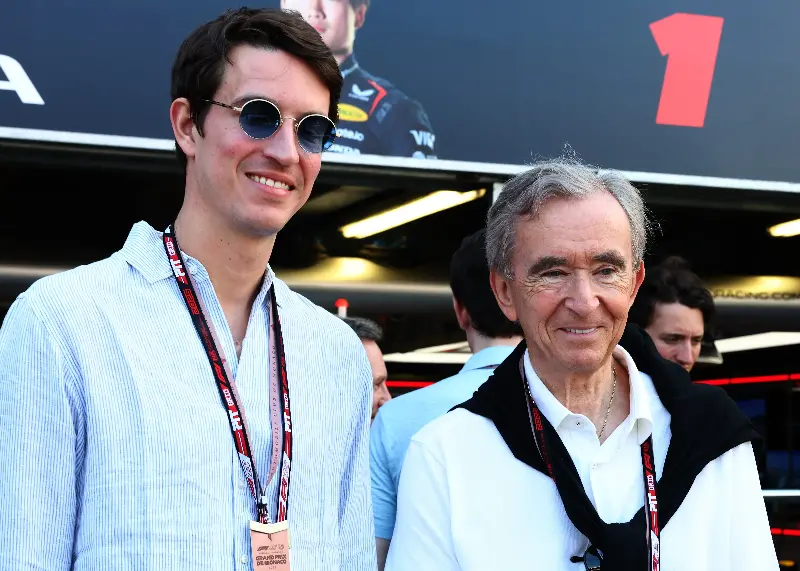
Now 77, Arnault remains in firm control of LVMH, supported by corporate rules that allow him to lead well into his mid-80s. However, the question of succession is the industry's favorite topic of speculation.
His five children currently fill pivotal roles across the empire, managing everything from watch divisions to major fashion labels. This suggests a family transition rather than a traditional corporate split. Behind the scenes, the Arnault clan has steadily increased its ownership stakes, strengthening their grip on the future of the conglomerate.

THE MAN BEHIND THE MONOGRAM
Beyond the net-worth statistics and market valuations, Bernard Arnault’s true legacy is cultural. He has defined what "aspirational" looks, smells, and feels like for an entire generation—from the cool heft of a watch clasp to the very first hint of perfume on the skin.
As the global market grapples with sustainability, economic inequality, and shifting consumer priorities, one question remains: In the coming age of luxury, will Bernard Arnault be remembered as the final titan of the old guard, or the pioneer who built something entirely fresh?